
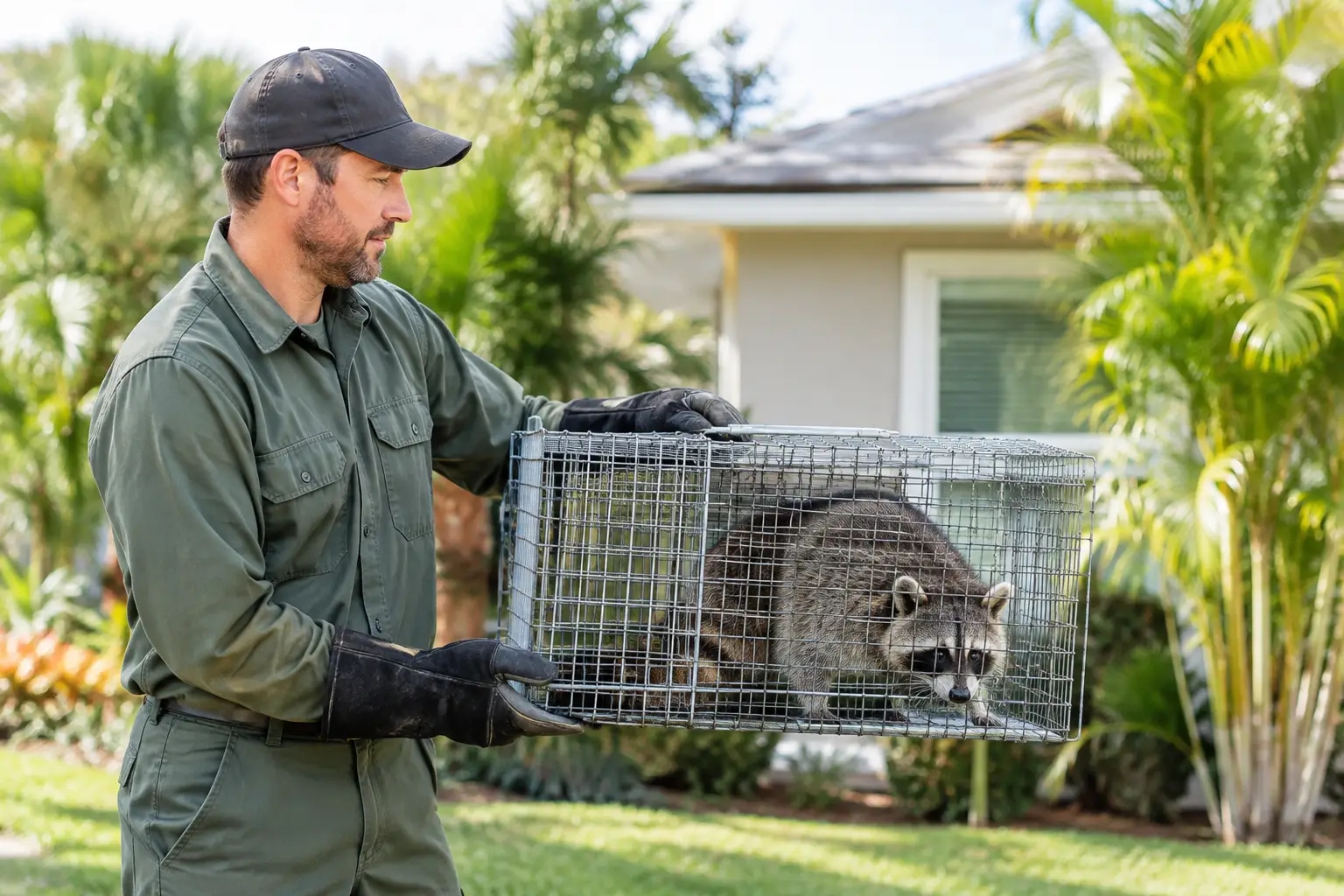

That scratching above the ceiling at night or overturned trash bin in the morning can be more than a nuisance. A professional wildlife removal service helps identify what is visiting or living on your property, remove it humanely and lawfully when appropriate, and address the conditions that allowed the problem to start.
In Northeast Florida, warm weather, seasonal rain, mature trees, waterways, and expanding neighborhoods keep wildlife active throughout much of the year. Raccoons, squirrels, opossums, armadillos, and snakes can all turn up near homes, businesses, garages, attics, crawl spaces, sheds, and outdoor living areas. The right response depends on the animal, where it is located, and whether it has access to the building.
Wildlife Around Your Property Is Not Always an Emergency
Seeing a wild animal outdoors does not automatically mean removal is needed. Many animals simply pass through yards while looking for food, water, or cover. An opossum crossing the patio after dark or an armadillo moving along a fence line may be a short-term visitor, especially near wooded lots and drainage areas.
A concern becomes more urgent when an animal is inside a structure, repeatedly returning to the same area, damaging the property, or behaving unusually. Wildlife can tear soffits, move insulation, chew materials, contaminate storage spaces, disturb pets, and create persistent noise. Animals that den in attics, wall voids, chimneys, crawl spaces, or beneath decks deserve prompt attention before the situation becomes harder to resolve.
Snakes require extra care. Florida has many nonvenomous snakes that help control rodents and other pests, but homeowners should never try to identify or handle an unfamiliar snake from a close distance. Keep people and pets away, observe from a safe location if possible, and contact a qualified professional when a snake is inside, near a high-traffic area, or creating a safety concern.
Signs You May Need a Wildlife Removal Service
The clearest sign is direct evidence of an animal inside the home or commercial building. You may hear scurrying, thumping, or scratching in an attic after sunset or early in the morning. Squirrels are often active during daylight hours, while raccoons and opossums are more commonly heard at night. The timing can help, but it should not be treated as a final identification.
Physical changes around the exterior matter, too. Look for disturbed vent screens, bent soffit panels, gaps at rooflines, torn duct covers, loose crawl-space vents, or openings around utility lines. Raccoons can use surprisingly small weak points, and squirrels may enlarge an existing gap. Fresh digging under a porch, shed, or slab may point to armadillo activity or another animal seeking shelter.
Odors, droppings, damaged insulation, and nesting material also deserve a professional inspection. These signs can overlap with rodent activity, so guessing can lead to the wrong solution. A technician can assess the evidence, identify likely entry points, and recommend a property-specific plan.
For businesses, it is especially wise to act early. Wildlife activity near dumpsters, loading areas, roof access points, or food storage areas can disrupt operations and create sanitation concerns. Property managers and landlords should also address reports quickly, since a small exterior opening can affect multiple units or common areas.
What a Professional Wildlife Removal Service Should Address
Removing or excluding the animal is only one part of the work. Long-term control starts with understanding why the animal selected the property in the first place. Food sources, standing water, shelter, easy roof access, and unsealed openings can all contribute.
A thorough service generally begins with an inspection of the affected area and the exterior. The goal is to identify the animal involved, locate active entry points, check for vulnerable areas, and determine whether young animals may be present. Timing matters because wildlife activity and nesting periods can affect how exclusion work should be handled.
Humane, lawful removal methods should be selected based on the situation and applicable Florida requirements. Some animals are protected or regulated, and improper trapping, handling, or relocation can create legal and animal-welfare issues. That is one reason a professional approach is safer than trying to solve an attic or crawl-space problem with an improvised trap.
After the animal is no longer using the space, exclusion is often the most valuable next step. This may involve repairing access points, securing vents, reinforcing weak areas, or recommending repairs to damaged materials. A wildlife removal service should also explain what it found in plain language, including which repairs are needed now and which preventive improvements would reduce future risk.
Prevention Starts at the Outside of the Building
Wildlife prevention is not about making a property sterile. It is about limiting easy opportunities for animals to enter structures or settle close to them. In St. Johns County communities, dense landscaping, nearby preserves, coastal conditions, and new construction can all change wildlife movement from one season to the next.
Start with routine exterior maintenance. Keep tree limbs trimmed back from the roof when practical, inspect soffits and rooflines after storms, and make sure screens over vents are intact. Repair gaps around pipes, cables, and utility penetrations, particularly where they enter attics, garages, or storage areas.
Trash and pet food can also attract nighttime visitors. Use secure container lids, clean spills around outdoor cooking areas, and avoid leaving pet food outside overnight. Bird feeders may be enjoyable, but spilled seed can draw squirrels, raccoons, and rodents closer to the home. If wildlife activity increases around a feeder, consider its location and how often the surrounding area is cleaned.
Moisture control is another practical step. Fix outdoor leaks, clear clogged gutters, and reduce areas where water regularly collects. These changes may not eliminate wildlife movement through the yard, but they can make the building itself less attractive.
Why Quick DIY Fixes Can Backfire
Closing a hole before confirming whether an animal is still inside can trap it in an attic or wall void. That can lead to more damage as it searches for another way out. It can also separate a mother from young animals, which is why inspection and timing are so important.
Store-bought repellents, bright lights, and loud noises may create temporary disturbance, but they rarely address a reliable food source or an accessible den site. They can also push an animal deeper into the structure. Similarly, handling wildlife without training creates avoidable risks for people, pets, and the animal.
There are situations where a homeowner can make simple preventive repairs after receiving guidance. But if there are noises inside the structure, visible damage at the roofline, repeated nighttime visits, or an unfamiliar snake near the home, professional assessment is the sensible next move.
Local Help for Northeast Florida Properties
Wildlife behavior is often tied to the property itself. A home in Nocatee near a preserve may have different pressure than a coastal property in Ponte Vedra Beach or an older home in St. Augustine with aging soffits and mature trees. The best solution is not a one-size-fits-all treatment. It is a clear inspection, careful removal or exclusion when needed, and practical steps that fit the building and its surroundings.
St. Johns Pest Control provides humane nuisance wildlife removal for residential and commercial customers throughout St. Johns County. If you are hearing activity overhead, finding recurring signs near an entry point, or are unsure what animal you are dealing with, reach out for professional guidance before a small access problem becomes a larger repair.