
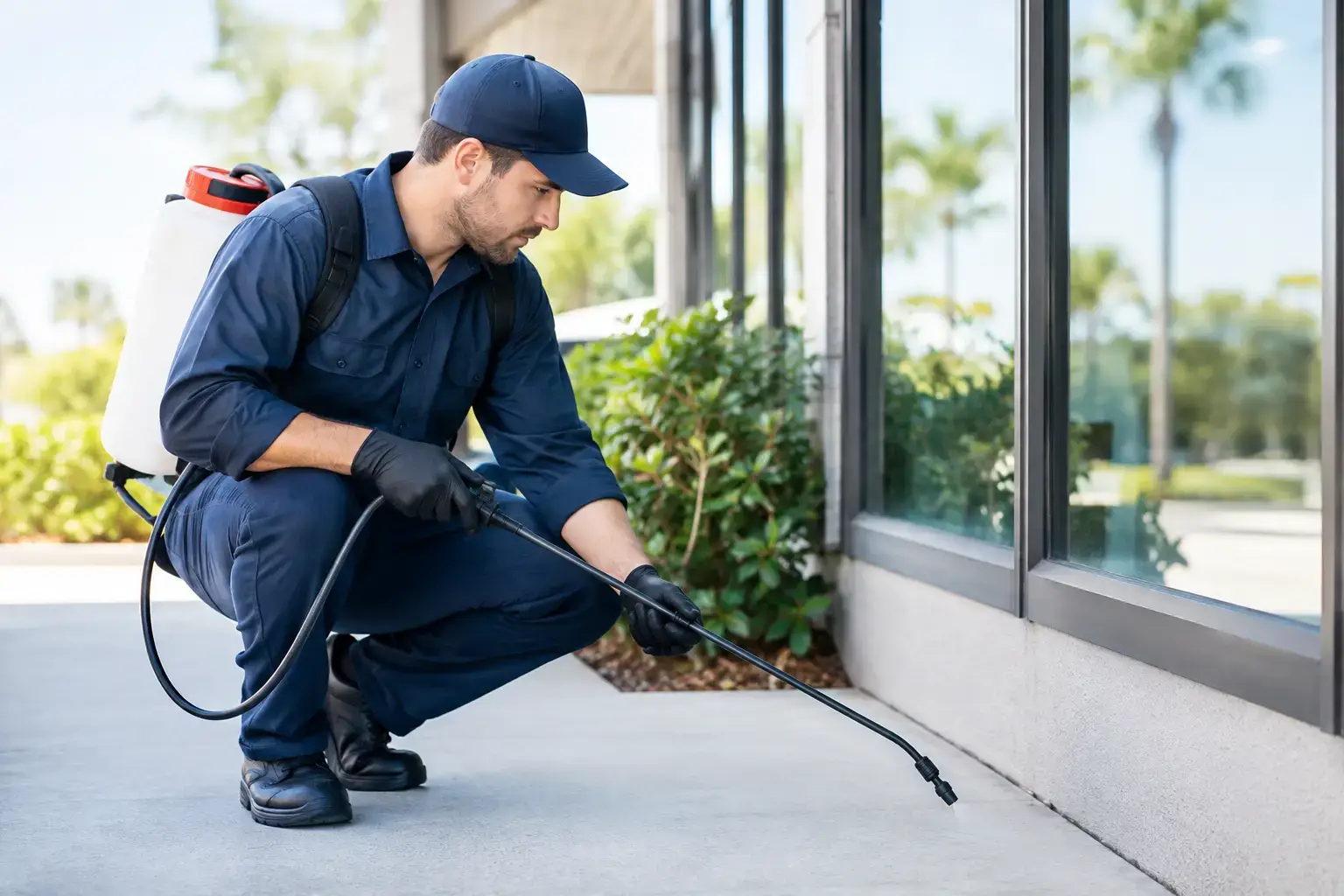

A customer spotting a cockroach near a restroom, an employee hearing rodents in a ceiling, or flies gathering around a dumpster can become more than an inconvenience. Commercial pest management gives businesses a clear way to address those concerns before they affect daily operations, tenant satisfaction, inventory, or a property’s reputation.
For businesses in St. Johns County and across Northeast Florida, pest pressure is rarely limited to one season. Warm temperatures, humidity, afternoon rain, coastal conditions, landscaped properties, and steady development all create opportunities for insects and wildlife to find food, water, and shelter. A practical plan focuses on the specific property, the pest involved, and the conditions allowing activity to continue.
Why Commercial Properties Need a Different Approach
A commercial property has different risks than a single-family home. There may be more doors opening throughout the day, shared walls, loading areas, food storage, floor drains, utility penetrations, trash collection points, and high levels of foot traffic. A small pest issue can move quickly through a building or create concerns for multiple tenants.
The right service plan also depends on the type of business. A restaurant, medical office, retail shop, warehouse, apartment community, office building, school, and vacation rental each have different operating patterns and pest vulnerabilities. Treatment should support the way the business functions, not interrupt it unnecessarily.
For property managers and landlords, communication matters just as much as treatment. They need to know what was found, where pest activity is occurring, what actions are recommended, and whether maintenance or sanitation conditions need attention. Clear documentation and dependable follow-up help managers make informed decisions for their buildings and residents.
Common Commercial Pest Concerns in Northeast Florida
Florida businesses often deal with pests that thrive in moisture, heat, and accessible food sources. Ants and cockroaches may enter through tiny gaps, travel along plumbing lines, or establish activity around break rooms and storage spaces. Palmetto bugs are especially common around damp exterior areas, landscaping, utility rooms, and buildings with gaps around doors or pipes.
Rodents can create a different kind of concern. They may enter through damaged vents, roofline openings, gaps around utilities, or poorly sealed loading areas. Once inside, they can use wall voids, ceilings, and storage areas for shelter. Signs may include droppings, gnawing damage, unusual odors, nesting material, or sounds after business hours.
Flies can become a recurring issue around food, drains, trash enclosures, moisture, and organic buildup. Mosquitoes may affect employees and guests in outdoor seating areas, entrances, walkways, and community amenities after periods of rainfall. In some situations, nuisance wildlife such as raccoons, squirrels, opossums, or snakes may also require professional, humane attention around commercial grounds or structures.
Termites deserve special attention because their activity can remain hidden. Businesses and property managers should not wait for visible damage to think about termite prevention or inspections. Regular professional evaluation can help identify conditions that may increase the risk of termite activity around a structure.
What Effective Commercial Pest Management Looks Like
Professional pest management is more than applying a product when someone sees a bug. It begins with understanding the property. A thorough inspection looks for pest evidence, likely entry points, moisture issues, harborage areas, food sources, and conditions around the building that may be contributing to activity.
Identification comes next. Ants, cockroaches, flies, and rodents do not all respond to the same treatment strategy. Proper identification helps determine where to focus service and which preventive changes will make the biggest difference. Treating the visible symptom without addressing the source can lead to repeated calls and ongoing frustration.
A well-designed program generally includes targeted treatment, exclusion recommendations, sanitation guidance, and scheduled monitoring or maintenance when appropriate. The goal is to reduce current activity while making the property less inviting to pests over time. For a busy business, that often means coordinating service around operating hours, tenant needs, customer access, and sensitive areas.
Inspection Should Look Beyond the Interior
Interior treatment may be necessary, but many commercial pest problems begin outside. Overgrown vegetation against a building, standing water, overflowing dumpsters, cracked door sweeps, and gaps around utility lines can all contribute to pest pressure.
Exterior inspections should include entry doors, loading areas, rooflines, HVAC penetrations, trash and recycling areas, landscaping, drainage, and foundation conditions. At apartment communities or multi-tenant properties, common areas and exterior conditions can affect several units at once.
Prevention Is a Shared Responsibility
Even the most thorough treatment works better when building conditions support it. Business owners and staff do not need to become pest control experts, but a few routine habits can make a meaningful difference. Food should be stored in sealed containers where practical, spills should be cleaned promptly, and trash should be managed consistently.
Maintenance teams can help by repairing leaks, improving door seals, screening vents where appropriate, and addressing gaps around plumbing or utility access. Employees should know who to notify when they see pest activity so small concerns do not go unreported for weeks.
Choosing a Service Schedule That Fits the Property
There is no single schedule that suits every commercial building. A restaurant or food-focused facility may need closer monitoring than a professional office. A warehouse with frequent receiving activity may need strong attention to loading doors and stored materials. A property with recurring moisture issues may require more frequent service until the contributing conditions are corrected.
Season also matters in Northeast Florida. Rainy periods can increase mosquito activity and draw pests toward dry indoor shelter. Warmer months may bring more ants, cockroaches, flies, and outdoor pest pressure, while rodents may seek protected spaces when weather patterns change. Ongoing service allows a provider to adjust the plan as conditions change instead of relying on a one-time response.
For property managers, a scheduled program can also make budgeting and communication easier. It provides regular opportunities to inspect common problem areas, address new concerns, and document recommendations before a minor issue becomes a more disruptive one.
When to Call for Professional Help
A single pest sighting does not always mean there is a major infestation. However, repeated sightings, daytime cockroach activity, rodent droppings, persistent fly problems, damaged packaging, pest complaints from tenants, or evidence of termites should be evaluated promptly.
It is also wise to call when a business is preparing to open, taking over a new commercial space, renovating, or managing a property after a vacancy. These are useful times to inspect for existing pest conditions, identify entry points, and establish a prevention plan before normal operations are underway.
Avoid relying on repeated store-bought treatments as the only answer for a commercial problem. Those products may temporarily reduce what is visible while leaving the underlying source, entry point, or nesting area unaddressed. They can also complicate proper identification and treatment planning.
Local Service Makes a Practical Difference
Commercial properties in Ponte Vedra Beach, Nocatee, St. Augustine, and surrounding communities face pest challenges shaped by the local environment. Coastal humidity, heavy rain, irrigation, new construction, wooded lots, and high-traffic commercial areas all influence how and where pests become active.
St. Johns Pest Control provides property-specific commercial service with inspections, targeted treatment, prevention recommendations, and ongoing management options. As a family-owned local company, the focus is on honest communication and practical steps that help protect your building, employees, customers, and daily operations.
If pest activity is disrupting your business or raising concerns at a managed property, a professional inspection can provide a clear starting point. The best time to address a pest problem is when it is still manageable, with a plan built around the way your property actually operates.