

A termite problem rarely begins with a dramatic warning. In many Northeast Florida homes, the first visible clue is a thin mud tube near the foundation, paint that appears to bubble, or wood that sounds hollow when tapped. By that point, termites may have already been feeding out of sight. Effective termite control starts with knowing what to look for, understanding why local conditions invite activity, and responding before a small concern becomes a costly repair.
St. Johns County’s warm temperatures, humidity, regular rainfall, and abundant wooded areas create favorable conditions for subterranean termites. Whether a property is in an established St. Augustine neighborhood, a newer Nocatee community, or near the coast in Ponte Vedra Beach, termites can find their way to a structure through soil, moisture, and small gaps around foundations and utility lines.
Why termites are active in Northeast Florida
Subterranean termites live in the soil and need moisture to survive. They travel through protected tunnels to reach wood and other cellulose materials in and around a building. That can include framing, trim, porch supports, fencing, stored lumber, cardboard, and wood debris left near the home.
Florida’s climate does not give termites a long winter slowdown like colder parts of the country. Activity can continue for much of the year, although swarming is often more noticeable during warm, humid periods, particularly after rain. A swarm does not necessarily mean termites are actively damaging the building, but it does mean a mature colony is nearby and deserves attention.
Coastal conditions can add another layer of risk. Wind-driven rain, high humidity, irrigation, and drainage issues can keep soil and structural areas damp. Older homes may have hidden moisture problems or construction details that make inspections more challenging. Newer homes are not automatically protected either. Landscaping, mulch, settling, and changes around the foundation can create termite-friendly conditions over time.
Signs that call for termite control
Termites work quietly, so visible signs can be subtle. Homeowners and property managers should pay attention to changes around the exterior, crawl space, garage, and interior walls rather than waiting for obvious structural damage.
Mud tubes are one of the clearest signs of subterranean termite activity. These pencil-sized shelter tubes may appear on foundation walls, piers, plumbing penetrations, garage walls, or other surfaces leading from the soil toward the structure. Termites use them to stay protected from dry air and predators while traveling.
Other warning signs include discarded wings near windowsills or doors, blistered or uneven paint, floors that feel soft or unusually uneven, and trim that crumbles or sounds hollow. Doors and windows that suddenly stick can also be worth investigating, although humidity and normal settling can cause similar problems. The point is not to self-diagnose from one symptom. It is to have suspicious conditions checked promptly.
A swarm of winged insects is commonly mistaken for flying ants. Termites generally have straight antennae, a thicker waist, and wings that are similar in length. Flying ants have elbowed antennae, a pinched waist, and front wings that are longer than their rear wings. If possible, save a few insects or take a clear photo for identification.
What professional termite control involves
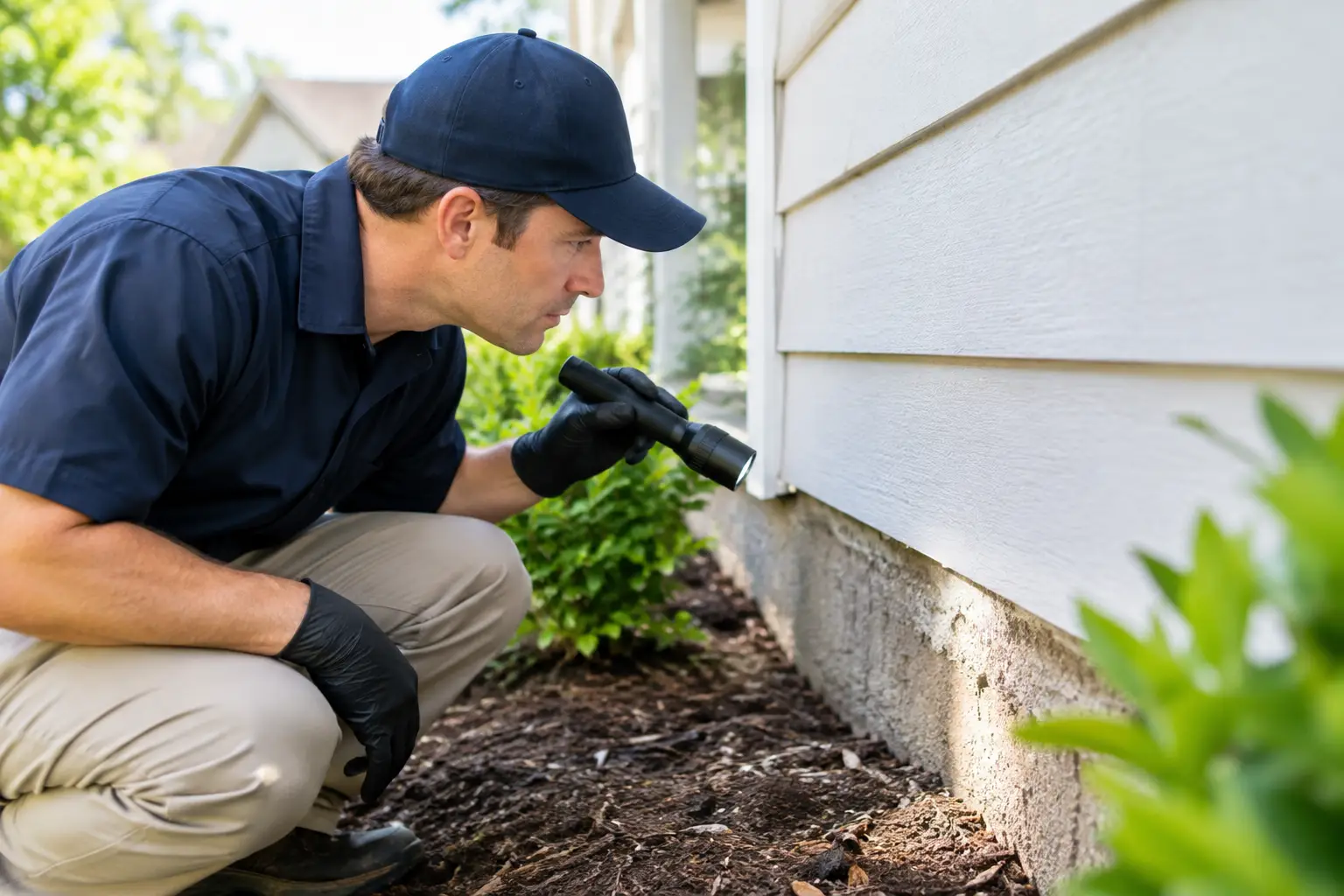
A thorough termite inspection is more than a quick look around the outside of a house. A trained professional evaluates accessible areas where termites may enter, travel, or feed. That often includes the foundation, exterior walls, garage, attic access, crawl space when present, porches, interior areas showing possible damage, and locations with moisture or wood-to-soil contact.
The inspection should also consider the property itself. Mulch piled high against siding, leaking outdoor faucets, poor drainage, overgrown vegetation, and wooden elements in direct contact with soil may all affect risk. For commercial buildings and rental properties, inspections may also focus on utility rooms, storage areas, loading zones, and sections where moisture or maintenance concerns are more common.
Treatment recommendations depend on the construction of the structure, the termite evidence found, access conditions, and the extent of activity. A property may need a localized treatment, a soil treatment around key entry areas, a baiting approach, or another plan based on the inspection. There is no responsible one-size-fits-all answer.
For example, bait systems can provide ongoing monitoring and colony management when maintained correctly, while liquid treatments may be appropriate for creating a treated zone in certain situations. The right option involves trade-offs involving access, property design, monitoring needs, and the specific termite pressure around the building. A licensed professional should explain the findings and the recommended approach in plain language before treatment begins.
Prevention steps that make a real difference
No prevention step can make a property completely termite-proof, but reducing moisture and limiting hidden access can lower the chance of an unnoticed problem. Start by keeping gutters, downspouts, and grading directed away from the foundation. Repair leaking faucets, damaged irrigation heads, roof leaks, and plumbing issues as soon as possible.
Keep mulch, pine straw, and soil below the lower edge of siding or stucco weep areas. This helps make termite tubes easier to spot and reduces the chance that landscaping will bridge a gap between soil and structural materials. Avoid stacking firewood, lumber, cardboard, or yard debris directly against the home. Store those materials off the ground and away from the structure when practical.
Wooden fences, planters, porch posts, and deck components deserve regular attention. When wood stays in direct contact with soil, termites have an easier path to food. That does not mean every outdoor wood feature must be removed, but it should be maintained and checked regularly.
Inside, watch for persistent moisture under sinks, around tubs, near water heaters, and in laundry areas. Use ventilation where needed, and do not ignore a musty odor in a closet, crawl space, or utility area. Moisture attracts more than termites. It can also contribute to conditions that support other pests and wood-damaging fungi.
Why annual termite inspections are worth scheduling
An annual inspection gives property owners a chance to catch early evidence before damage becomes more extensive. It also creates an opportunity to identify changing conditions, such as new landscaping, drainage changes, renovations, or moisture concerns that could affect the property’s risk.
For landlords and property managers, regular inspections can be especially useful between tenants or before major maintenance work. Termite activity can be hidden behind walls, inside storage areas, or beneath flooring, and an occupied building may not reveal every concern right away. A documented inspection schedule supports more proactive property care.
If a home has had termite treatment in the past, continuing inspections are still valuable. Treatments and monitoring programs need appropriate follow-up, and property conditions can change from year to year. The goal is not simply to react to damage. It is to maintain a clear picture of what is happening around the structure.
When to call for help
Call for a termite inspection if you find mud tubes, discarded wings, damaged wood, or unexplained moisture near structural areas. It is also wise to schedule an inspection before purchasing a home, beginning a major renovation, or when you have concerns about an older structure.
St. Johns Pest Control provides property-specific termite inspections and treatment recommendations for homeowners, landlords, property managers, and businesses throughout St. Johns County. Clear answers matter when protecting a home or building investment, and the best next step is often a careful inspection rather than guesswork.
A termite issue does not need to become a reason to panic. Paying attention to early signs, correcting moisture concerns, and arranging professional help when something looks unusual can protect both the structure and your peace of mind.